Brand Development
3.4.1 Week 4 Discussion - Reflections
3.4.1 Week 4 Discussion - Reflections
“Who are you? What do you do? What’s your vision?”
Neumeier, M. (2013). ZAG: The #1 Strategy of High-Performance Brands. Pearson Learning Solutions. VitalBook file.

Where Do We Come From? What Are We? Where Are We Going?
D’ou Venons Nous / Que Sommes Nous / Où Allons Nous
Gauguin, P. (1897) Museum of Fine Arts, Boston. Retrieved from http://www.wikipaintings.org/en/paul-gauguin/where-do-we-come-from-what-are-we-where-are-we-going-1897

1. What, in particular, makes the company’s brand that you’ve chosen for your campaign project unique from the others (What is the differentiating factor, “zag,” or USP)? What could you do to increase the differentiating factor?
Having done further research on the companies in my chosen sector, I have decided to go in a different direction for my thesis project. I found that the 4 companies that I was focusing on were very similar, and they all seem to be moving in the same direction or zigging. Instead of Hurley, I have decided to go with another company that I feel is truly on a zag.
The company that I’ve chosen is M. Nii. Their design concept is based on the M. Nii boardshorts that were created originally in a tailor shop in Hawaii in the 1950’s. Local surfers would bring in their shorts for repairs, which led M. Nii to launch their own shorts that could deal with the wear and tear of surfing. Word spread, and soon surfers who came to Hawaii for the competitions would leave with several pairs. Current designer John Moore has revived the original M.Nii brand. M.Nii is focused on recreating the same quality as was had back in the 50’s and 60’s, staying true to even the smallest of details.
According to Moore, “Reviving M. Nii’s is the antithesis of the current surf industry. No matter where you look designs all have brand logos or flashy graphics slapped on them, and are just products thought of in terms of PR and sales. But the M. Nii’s that used to exist were different. They were very simple, but had individual appeal with varying color schemes and stripe pitches, and were pure items that were for true surfers.” (Moore 2013)
2. “Brand strategy is the process where the offer is positioned in the consumers mind to produce a perception of advantage. ” (Levens 88). In considering the companys USP, list three ideas that might produce a perception of advantage for your companys brand over its competitors in the minds of the target audience (also see “Big Idea,” pages 16– 17 in Designing Brand Identity by Alina Wheeler).
Billabong, one of Australia’s most iconic surf brands confirmed that the brand is basically worthless. Like Billabong, public surf company Quiksilver has reported declining revenues. Privately owned Rip Curl has also experienced huge profit loss. Each of these three grew up in the 1970’s with the rising popularity of the beach and surfing. The people running each business were surfers themselves and the brands established strong credibility within the surfing subculture. Ironically commercial success has also been the source of their troubles. As the big surf brands grew so did a disconnect between global commercial ambitions and maintaining local subcultural credibility. The problems being experienced by the big companies have actually created space for the growth of creative, independent surf brands.
Despite the troubles in the Australian market, the global demand for surf-styled apparel is expected to remain strong. This creates opportunities for a new, focused company like M. Nii to establish a strong subcultural credibility. “If the purpose of design management is to identify and communicate the ways in which design can contribute to a company’s strategic value, then identifying opportunities for design is first step towards this.” (Borja de Mozota, 2003). (Best 2013 p. 29)
According to Lecturer Andrew Warren “The big three have lost their ‘cool’ with young people – their core demographic.” (Warren 2013). This target audience is looking for authenticity. M. Nii has its history and Hawaiian heritage to establish its authenticity and a strong local subcultural credibility. The board shorts that started in a tailor shop have a legendary existence in surfing.
By focusing on the simplicity of design in the retro clothing styles, M. Nii can produce a perception of advantage. As Russ Meyer explains, “We like to think of simplicity as really shortening the distance between a brand and the customer.” (2013)
References:
Designer John Moore (12/12/2012). The Miraculous Revival of the Legendary Hawaiian Brand M. Nii. Beams. Retrieved fromhttp://www.beams.co.jp/pickup/detail/929?lang=en
Best, K. (2013). Design Management: Managing Design Strategy, Process and Implementation. AVA Publishing, 10/2006. VitalBook file.
Warren, Andrew. (September 25, 2013). Regaining their “cool”: can the big three surf brands recover? The Conversation. Retrieved fromhttps://theconversation.com/regaining-their-cool-can-the-big-three-surf-brands-recover-18406
Russ Meyer (2014). Siegel & Gale. Retrieved from http://www.siegelgale.com/services_detail/brand-development/


1.What, in particular, makes your personal brand unique? In what way could your brand be considered a zag, or, based on what you presented for your brand, what could you do to create a zag?
All of the images in my brand brief are my original artwork. They are images that have an emotional meaning. My brand is unique in that I continuously search for inspiration to create meaningful visual imagery. That could be considered a zag. Being able to illustrate ideals with original artwork allows me to provide complete customization to a client.
“Customising products and services is an invaluable way to achieve competitive advantage through design because it creates ‘unique’ offers for consumers. Ours is now a world of mass production; vast quantities of the same products roll of factory production lines throughout the world. But, with the emergence of new technologies, it is becoming more and more common to see mass customisation; where the benefits of mass production (such as lower costs or increased distribution efficiency), are combined with the benefits of goods and services that are customised around individual consumer needs. Organisations such as Dell and Levi Strauss have been particularly successful at offering mass- customised products and services.” (Best 2013)
My brand is also committed to learning and developing skills. Being in this MFA program is a big step in that direction. I could focus on this “generative learning” to create a zag.
“Gerstner was successful in transforming IBM from a seller of “big iron” to a leader in technology services because he was able to address the central problem of brand-building: How do you get a complex organization to execute a simple idea? Of course, first you have to get a simple idea—a zag. Second, you have to use “generative learning” rather than “simple learning” to change the way the business operates. “Simple learning” is learning how to do the same thing better. “Generative learning” is learning how to do new things. “Most of all,” said Gerstner, “it requires that the organization do something different, value something more than it has in the past, acquire skills it doesn’t have.” (Neumeier 2013)

2. Which features, or “Brand Identity Ideals” are common to all four companies? Which are unique? Identify each company’sdifferentiating factor
All four of the companies that are in my chosen business sector have the same meaning. They stand for, represent and identify with the same surfer image and lifestyle ideal. All four companies also demonstrate flexibility and positioning for growth by identifying with a new influx of female surfers. Quicksilver and Rip Curl differentiate themselves by reaching out to very young surfers and supporting youth surfing competition. They and Hurley also position themselves as promoting the surfing lifestyle, but they are inclusive of those who are buying into the image and lifestyle that the brands represent. Billabong’s zag is that they appear to be exclusively targeting surfers only.
3. Draft an “Onliness Statement” for each company. Why is each relevant? Highlight the onliness statement for the company that youve selected to develop the campaign project for your thesis.
Ranked first, Quicksilver demonstrates a very strong brand. Their onliness statement could be something like: Quicksilver is the only surf apparel company that leads and lives the action sports lifestyle, designs, produces and distributes clothing, accessories and related products for young-minded people.
Ranked in second position, Billabong’s onliness statement could be: Billabong is the only surf apparel company that is for surfers only. Of course, this image is also appealing to those who want to appear to be surfers. Billabong’s brand targets the teen and 20s age group and is pretty edgy.
Rip curl is ranked in third position. They also have a very strong bland, and their focus is the lifestyle. Their onliness statement could be: Rip Curl is the only surf apparel company for, and about, the crew on the search.
Initially, I was interested in working on a rebrand for the surf and sail products company Hobie. After looking into the company, I found that Hobie doesn’t really have much to do with apparel any more. They have teamed up with Hurley to develop a clothing brand that would appeal to the older surf. I’m planning to do my rebranding project on Hurley. Hurley positions itself as being inclusive. Hurley also demonstrates ideal of flexibility by its claim that it is based on its love of the ocean and its constant state of change. Hurley’s onliness statement could be: Hurley is the only surf apparel company that loves the ocean and its constant state of change, with deep roots in beach culture, that is all about inclusion and positivity.
“A brand is more than simply a name; it is a promise. This promise manifests itself in everything that consumers can sense about a brand. If the promise is continually kept, the brand’s image is solidified by its reputation.” (Levens 2013)
References:
Neumeier, M. (2013). ZAG: The #1 Strategy of High-Performance Brands. Pearson Learning Solutions. VitalBook file.
Best, K. (2013). Design Management: Managing Design Strategy, Process and Implementation. AVA Publishing, 10/2006. VitalBook file.
Levens, M. (2013). Marketing, 1/e Vitalsource eBook for Full Sail University. Pearson Learning Solutions. VitalBook file.

3.1.2 Week 1 Design Project
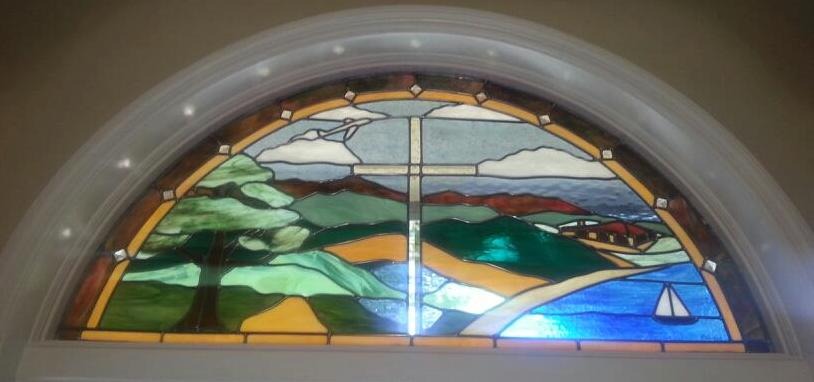
Vision – I created this window for my uncle who wanted it to represent his life with my aunt, who recently passed away. I was able to visualize this scene from the abstract ideas that he gave me. He tells me that he gets great joy from this window, which is a wonderful thing for me.
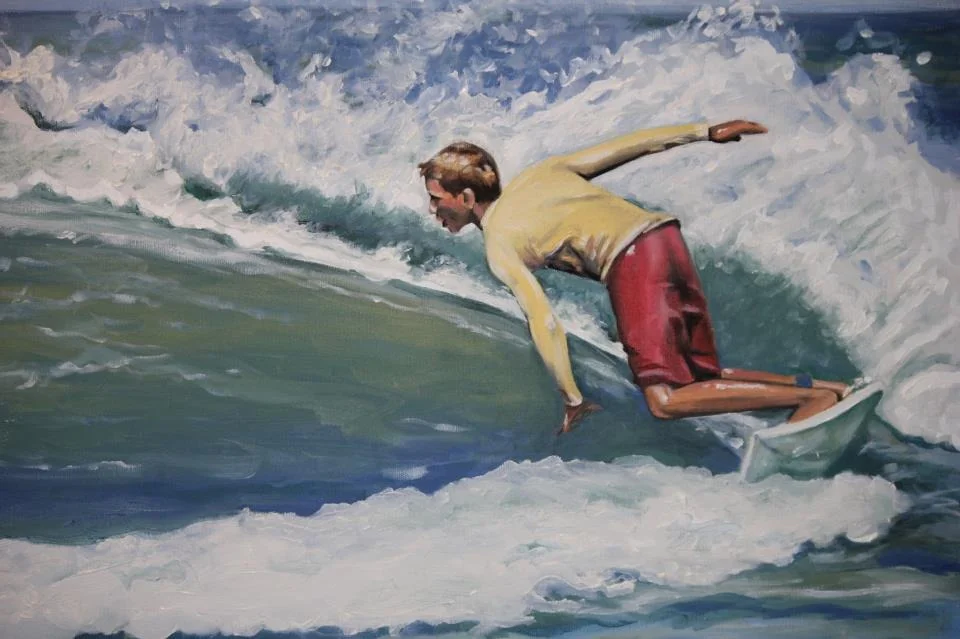

Commitment –These are pictures of two of my paintings. Part of my brand is my ability to create emotion filled artwork.

Authenticity –This image is a picture of my family. These are some of the most important people in my life. I get my energy from the people that I love.
1. Refer to the 9 “Brand Identity Ideals” from page 29 of your book, Designing Brand Identity by Alina Wheeler. List at least 6 of Wheeler’s ideals that can be used to help differentiate you as a brand from others. Under each ideal, describe a quality about yourself that helps to define how you are unique. What, in particular, makes “you” as a brand unique from others? How do these ideals relate to Marty Neumeierʼs 17-step process? Provide direct quotes with in-text APA-style research citations to substantiate your statements. (Note: Please make the statements about yourself in the third person).
The 9 “Brand Identity Ideals” from Designing Brand Identity by Alina Wheeler are vision, meaning, authenticity, coherence, differentiation, flexibility, sustainability, commitment, and value.
Vision – Marcia Coles has a unique ability to take abstract ideas that have been presented, to visualize a completed project incorporating those ideas, and is able take the necessary steps to carry them through to a finished product.
Alina Wheeler says, “Vision requires courage. Big ideas, enterprises, products, and services are sustained by organizations who have the ability to imagine what others cannot see and the tenacity to deliver what they believe is possible.” (Wheeler, 2013). Marty Neumeier’s checkpoint 3 asks, “What is your vision?” According to Marty Neumeier “When you put your vision to paper, you can immediately see its flaws. Then you can reinforce it to withstand the slings and arrows that test the resolve of any organization. (Neumeier 55)
Differentiation – “It is not enough to be different. Brands need to demonstrate their difference and make it easy for customers to understand that difference.” (Wheeler, 2013). Marty Neumeier expands on the importance of differentiation in his book ZAG. With checkpoint 6: what makes you the “only”? (Neumeier 2013). More on this point is discussed in question 3.
Authenticity – “Authenticity refers to self-knowledge and making decisions that are congruent with that self-knowledge. Organizations who know who they are, and what they stand for, start the identity process from a position of strength. They create brands that are sustainable and genuine.” (Wheeler 2013)
This relates to Neumeier’s “Checkpoint 1: who are you?” “The first step in building a brand is to look inside and see where the raw energy will come from.”
(Neumeier 2013). Marcia gets her energy from love. She understands that her life is built around the relationships that she has with the other people in her life.
Flexibility – “Innovation requires brands to be flexible. No one can say with certainty which new products or services a company might offer in five years. Or for that matter, what devices we will all be using to communicate with one another and how we will be purchasing our worldly goods. Brands that are open to change need to have flexible brand identity systems in place to quickly seize new opportunities in the marketplace.” (Wheeler, 2013). Marcia has been extremely flexible throughout her life, being able to adapt and change to be effective, and relevant. This relates to “checkpoint 4: what wave are you riding?” (Neumeier 2013) “You can certainly build a brand without harnessing a trend, but you won’t get the raw, youthful energy of a zag. When focus and differentiation are powered by a trend, the result is a charismatic brand that customers wouldn’t trade for love nor money. It’s the difference between paddling a surfboard and riding a wave.” (Neumeier 2013)
Commitment – “Organizations need to actively manage their assets, including the brand name, the trademarks, the integrated sales and marketing systems, and the standards.” (Wheeler 2013)
This relates to “checkpoint 15: how do you earn their loyalty?” (Neumeier 2013) “For brand loyalty to grow, it must be earned, and it must be mutual. As adman David Ogilvy famously observed, “Any damn fool can put on a deal, but it takes genius, faith, and perseverance to create a brand.” (Neumeier 2013)
“Building, protecting, and enhancing the brand requires desire and a disciplined approach to insure its integrity and relevance.” (Wheeler 2013)
Marcia is committed to her brand. She is continuously developing her skills, increasing her knowledge, and nurturing the relationships in her life.
Value – “Building awareness, increasing recognition, communicating uniqueness and quality, and expressing a competitive difference create measurable results.”
(Wheeler 2013) “Creating value is the indisputable goal of most organizations. The quest for sustainability has expanded the value conversation with consumers. Being socially responsible, environmentally conscious, and profitable is the new business model for all brands. A brand is an intangible asset—brand identity, which includes all tangible expression from packaging to websites, upholds that value.” (Wheeler 2013)
“Checkpoint 11: how do you explain yourself?… All brand communications should emanate from an internal positioning line, or “trueline.” A trueline is the one true thing you can say about your brand, based on your onliness statement. It must be something that your competitors can’t claim (or won’t), and something that your customers find both valuable and credible. Remember, it’s not what you say, but what they say, that counts. In a nutshell, your trueline is your value proposition, the reason your brand matters to customers.” (Neumeier 2013)
When Marcia says she will do something, you can count on it. She always aims not to just get the job done, but to blow the client away with the excellence of her product. This is the value of her brand.
2. Research, select, and post images that illustrate at least 3 of your “Brand Identity Ideals.” Why are each of these images relevant to your personal “brand?” Explain.
Authenticity –This image is a picture of my family. These are some of the most important people in my life. I get my energy from the people that I love.
Commitment –These are pictures of two of my paintings. Part of my brand is my ability to create emotion filled artwork.
Vision – I created this window for my uncle who wanted it to represent his life with my aunt, who recently passed away. I was able to visualize this scene from the abstract ideas that he gave me. He tells me that he gets great joy from this window, which is a wonderful thing for me.
3. Post an “Onliness Statement” for your personal brand (in the third person). Why is the “Onliness Statement” relevant? Provide direct quotes with in-text APA-style research citations to substantiate your statement.
Marty Neumeier expands on the importance of differentiation with checkpoint 6: what makes you the “only”? He invites us to “Complete this sentence: Our brand is the only ________ that ________.“ (Neumeier 2013).
Marcia Coles is the only designer that also paints, creates leaded glass windows, builds and sells houses and has raised 3 kids.
“An onliness statement provides a framework for your zag. Once you’ve defined your point of differentiation, you have a decisional filter for all your company’s future decisions. By checking back against your statement you can quickly see whether any new decision will help or hurt, focus or unfocus, purify or modify your brand.” (Neumeier 2013)
Wheeler, Alina. Designing Brand Identity: An Essential Guide for the Whole Branding Team, 4th Edition. (2013) John Wiley & Sons P&T, 10/22/12. VitalBook file.
Neumeier, Marty. ZAG: The #1 Strategy of High-Performance Brands. (2013) Pearson Learning Solutions. VitalBook file.
Defining Clients Needs is all about realizing the importance of doing the research. Here I’ve identified 3 reasons to do a thorough research on the market sector and the company that you’re designing for.
1. Do research to find out your client’s who, what and why.
The first thing you need to do when you’re starting on a new project with a new client is to find outwhat is it that they really want to accomplish and communicate. Hillman Curtis says the first thing he asks a new client is — “What’s the story?” — And there you have it… the company’s history, its points of pride, its shortcomings, and its core values”. Neumeier’s points out, that you need to “—demand unambiguous answers to three little questions: 1) Who are you? 2) What do you do? 3) Why does it matter?… Unless you have compelling answers to all three questions, meaning that customers find them irresistible, you haven’t got a brand…Together, these questions provide a litmus test for what makes you different, what gives your company its raison d’etre.” (Neumeier 2006.)
Having a good understanding of your client’s story, Their who, what and why enables you to boil it down to what is really important. Simplificationis key. Curtis says, “And just as the haiku’s beauty lies in its apparent simplicity, so, too, does a good design’s”. (Curtis 2011) Kit Hinrichs also had some good things to say about simplification. “The thing when we did muzak was this simplification from the whole name down to a single symbol. It wasn’t just a matter of how do we change their identity? How do we change the way we communicate about them? Simpler, stronger messages.” (Hinrichs 2013)
2. Use your research to show the client that you know what you’re doing.
Margo Chase pointed out that the designer has to explain the process before they can get to the creative and make something. Their clients really need to be able to understand why they were making the design recommendations that they were making. The more quantitative, repeatable and mathematical the process could be, more comfortable the clients were with it. “The idea of sort of the black art of creativity makes a lot of marketing people really uncomfortable. And so they like knowing that there is a process that makes sense that they can understand and repeat.” (Chase 2013)
In his book, The Designful Company, Marty Neumeier talks about how designers in the 20th century were considered “exotic menials” by the captains of industry. There was the “dominance of spreadsheet thinking” in business. “Somewhere in the middle of the last century, trained designers began touting various design processes as a way to change their status from “exotic menials” to “serious professionals.” A number of processes appeared, but mostly they were one-way flow charts that guided projects through a series of phases. When you stripped away the trademarked terms and customized embellishments, they came down to four basic phases: 1) discovery, 2) ideation, 3) refinement, and 4) production. This logical sequence gave comfort to business managers, since the designing could then be managed, tracked, compared, and measured like manufacturing.”
There is still a sort of communication gap between designers and business people. Designers need to really connect with their clients on a specific level to make them see that they understand the business problem, the marketing objectives, and all the things that their clients are dealing with.
3. Use research to support design choices and track progress.
Showing a client research that was done is a convincing way to support a design choice. Visocky says “Though the power of design may not always be easily measured, there are many steps that practitioners can undertake to ensure that they are making informed choices, rather than producing artifacts. Research findings can help the designer in a variety of ways. From supporting great concepts to measuring the effectiveness of finished products, a research-driven approach can help define the way problems are solved and illustrate the value of those solutions.”
References:
Chase, M. (Designer), & Lowery, C (Designer) (Sept. 4 2008) Margo Chase: Creative Inspiration. Lynda.com. Retrieved fromhttp://www.lynda.com/Design-Documentaries-tutorials/Style-guides/685/38839-4.html
Visocky O’Grady, J., and Visocky O’Grady, K. (2006). A Designer’s Research Manual, Gloucester, Massachusetts, Rockport Publishers, Inc.
Neumeier, Marty. Brand Gap, The: Revised Edition, 2013. 2/e Vitalsource eBook for Full Sail University. Pearson Learning Solutions. VitalBook file.
Curtis, Hillman. MTIV: Process, Inspiration and Practice for the New Media Designer, 1/e Vitalsource eBook for Full Sail University. Pearson Learning Solutions, 12/2011. VitalBook file.
Hinrichs, Kit. 2013. Retrieved from http://www.lynda.com/search?q=Kit+Hinrichs
Best, Kathryn. Design Management: Managing Design Strategy, Process and Implementation. AVA Publishing, 10/2006. VitalBook file.
Defining Client Needs
Reflect on what you’ve learned from reading the material and watching the videos. Elaborate on the three most important concepts or ideas that you can take forward in your future work.
This week I learned a lot about doing research into the companies that I’ve proposed to rebrand, and their competitors. I realized that there is a lot more to it than fist meets the eye. And I saw a lot of references in the reading about the importance of doing the research and really getting to know your client and their motivation.
1. The design concept that made the most impact on me this week is that simplification is key. Hillman Curtis says, “And just as the haiku’s beauty lies in its apparent simplicity, so, too, does a good design’s”. (Curtis 2011) I have always been aware of this concept, but the reading this week really made me think about it a lot. Kit Hinrichs also had some good things to say about simplification. “The thing when we did muzak was this simplification from the whole name down to a single symbol. As they went forward, it wasn’t just a matter of, gee, how do we change their identity that way? How we change the way we communicate about them? Simpler, stronger messages as you go through, not overly complicated things.” (Hinrichs 2013)
2. Companies today need to get to know their customers and to build relationships with them. A company and its brand need to continue to live and grow with their customers into the future. “According to Michael Porter, a world-renowned strategy guru, a business can differentiate itself from competitors based on the following: (1) the core product or service, (2) price, and (3) the total relationship and customer experience. Companies are finding that the first two are difficult in today’s competitive environment, and are focusing on the importance of developing strong customer relationships. Relationship marketing, or one-to-one marketing, requires that an organization be committed to the development of a customer relationship.” (Levens 2013)
3. The first thing you need to do when you’re starting on ta new project for a new company is to find out what their story is. What is it that they really want to accomplish and communicate? Hillman Curtis says that is often the best thing to ask first. “So there it is. One question — What’s the story? — And I had the company’s history, its points of pride, its shortcomings, and its core values under my belt. And as any designer knows, that much information is pure gold. (Curtis 28)
References:
Curtis, Hillman. MTIV: Process, Inspiration and Practice for the New Media Designer, 1/e Vitalsource eBook for Full Sail University. Pearson Learning Solutions, 12/2011. VitalBook file.
Hinrichs, Kit. 2013. Retrieved from http://www.lynda.com/search?q=Kit+Hinrichs


Packaged Seafood
Chicken of the Sea (4)
Bumble Bee (1)
Crown Prince (3)
Starkist (2)

Natural Personal Care
Dr. Bronner’s (4)
Rare Natural Care (3)
Organic Essence (2)
S C Johnson & Son, Inc. (1)

Surf Apparel
Hobie by Hurley International (4)
Quicksilver, Roxy (1)
Billabong (2)
Patagonia (3)
1. Given the market sectors and the 4 companies that you chose within each sector, what client needs can you identify to justify each project? What benefit to consumers would be gained by pursuing the project? Provide at least one direct quote from this week’s readings or videos with a citation to relate your answer to the research assignments.
Chicken of the Sea needs a new brand, a new name and an updated delivery method to compete in today’s packaged seafood market. The mermaid logo is dated. The name makes no sense. The packaging blends in with its competitors’ packaging and is too limited. Today’s consumer is socially conscious. The company is committed to operating a socially and environmentally responsible business from when the seafood is caught, to processing, packaging and delivery. The company’s brand needs to make this apparent. The brand needs to be simplified. The company also needs to explore other methods of packaging and delivering their product, such as frozen and vacuum packed. They currently do some frozen and vacuum packaging, but should expand.
Dr. Bronner’s brand really needs simplification. Natural personal care products have become a lot more mainstream recently than they were when Dr. Bronner’s first came out. It was first marketed to hippies. The brand needs to change, and they need to change the way it is marketed and distributed to be more available to the mainstream population. It would benefit the consumer because the products are good clean natural products that are being presented in a very unappealing way that turns a lot of people away. The general feel is clinical and analytical rather than having emotional appeal. It would be more appealing to a larger number of people if the brand were also clean and natural looking with a healthy emotional appeal.
Hobie was revolutionary in the surf industry. And the brand is recognizable, but has failed to compete with the legions of new surf companies that have flooded the market in recent years. Hobie has joined with Hurley International to develop a line of surf clothing that would appeal to the more mature surf crowd. They need a new clean logo and image that takes the iconic old school image that the company has and combines it with the current trends toward retro. The older surfer consumer would benefit from a line that is geared toward them.
“The thing when we did muzak was this simplification from the whole name down to a single symbol. As they went forward, it wasn’t just a matter of, gee, how do we change their identity that way? How we change the way we communicate about them? Simpler, stronger messages as you go through, not overly complicated things.” (Hinrichs 2013)
2. Considering the competitive landscape in each sector, why would it be important to go beyond a redesign of the current brand identity of your selected companies? Provide at least one direct quote from this week’s readings or videos with a citation to relate your answer to the research assignments.
The competitive landscape has changed and evolved a lot since each of the selected companies was started. They have all been successful, but they have not evolved their images and brands as time has gone by. Companies today need to know their consumers and to build relationships with them. A fresh new brand would be an exciting starting point to take each of these companies into the new environment, along with the attitude that each company needs to continue to live and grow and change with their consumers into the future.
“According to Michael Porter, a world-renowned strategy guru, a business can differentiate itself from competitors based on the following: (1) the core product or service, (2) price, and (3) the total relationship and customer experience. Companies are finding that the first two are difficult in today’s competitive environment, and are focusing on the importance of developing strong customer relationships. Relationship marketing, or one-to-one marketing, requires that an organization be committed to the development of a customer relationship.” (Levens 2013)
3. What are some of the more obvious features or services that are shared between the competing companies in each sector? What are some potential strategies for differentiating your selected company’s brand from the others?
Packaged Seafoods are a pantry and freezer staple for many households. All of the represented competing companies have very dated and bland brands. Chicken of the Sea could capitalize on a new brand that is fresh, clean and new. They could rework the mermaid into modern, appealing character that could have presence. The character could be made into an animated movie and attract a new generation of followers.
Companies in the Natural Personal Care sector are environmentally aware. They produce products that are environmentally friendly. Their general feel is friendly, transparent, and approachable. They are available in drugstores, natural food stores, and online through their web stores. Dr. Bronner’s has a spiritual element in its brand. The new-age associations of Dr. Bronner’s “all-one” philosophy initially attracted folks. Keeping the spiritual element that they already have in their brand, and expanding on it could differentiate them.
All of the Surf Apparel companies are competing to be hip, edgy and attractive to teenage surfers. Hobie by Hurley could differentiate its brand by designing clothing for the older crowd of surfers who would appreciate a cool line of clothing that is technologically sound and well made, for them.
“And we’re really, we’re the voice, at that moment, of letting people know how it’s changed. We don’t change the company. They changed the company. We just help them make it clear to the audience they want to talk to.” (Hinricks 2013)
References:
Levens, Michael. 2013. Marketing, 1/e Vitalsource eBook for Full Sail University. Pearson Learning Solutions. VitalBook file.
Neumeier, Marty. The Designful Company: How to build a culture of nonstop innovation for Full Sail University. 2013. Pearson Learning Solutions. VitalBook file.
Coming Clean Campaign. Organic Consumers Association. 2013. http://www.organicconsumers.org/bodycare/index.cfm
Hinrichs, Kit. 2013. Retrieved from http://www.lynda.com/search?q=Kit+Hinrichs
GoodGuide (2013) Retrieved 12/2013 from http://companies.goodguide.com/d/d/Personal-Care
Ranker (2013) Retrieved 12/2013 from http://www.ranker.com/list/top-surf-brands/we
Reflect on what you’ve learned from reading the material and watching the videos. Elaborate on the three most important concepts or ideas that you can take forward in your future work.
1. The concept of “why” really resonates with me. I first saw it in Neumeier’s book and like what he said. He points out, you need to “—demand unambiguous answers to three little questions: 1) Who are you? 2) What do you do? 3) Why does it matter?… Unless you have compelling answers to all three questions, meaning that customers find them irresistible, you haven’t got a brand…Together, these questions provide a litmus test for what makes you different, what gives your company its raison d’etre.” (Neumeier 2006. p. 32)
Then in his response to my discussion post Chaz Spearz referred to a video by a marketer by the name of Simon Sinek who stated the opposite of what Marty Neumeier stated. As opposed to who you are, what you do, and why you do it, Sinek suggested that you should start with why you do what you do, how you do what you do, and at last mention what you do. The order is reversed, but the concept is in the same vein, which I will continue to think about and use in by work.
2. A company’s brand is like a living thing that has to breathe and grow to continue to be relevant. Neumeier says “By combining logic and magic, a company can ignite a chain reaction that leads from differentiation to collaboration to innovation to validation and finally to cultivation. Built into cultivation is the mandate to question all assumptions, leapfrog the status quo, and begin the cycle again. With each turn, the company and its brand spiral higher, taking it further from commoditization and closer to the Holy Grail of marketing: a sustainable competitive advantage.” (Neumeier 146) I saw that the people at Royal Roads were excited by their new brand, which in turn inspired them to keep moving forward with more innovation and improvements.
3. I thought the concept of tribalism was very interesting. I really like the way Neumeier writes. Another of his many meaningful statements is “If you stretch the concept of tribe just a little, you can see that a brand creates a kind of tribe. Depending on your Unique Buying State, you can join any number of tribes on any number of days and feel part of something bigger than yourself. You can belong to the Callaway tribe when you play golf, the VW tribe when you drive to work, and the Williams-Sonoma tribe when you cook a meal. (Neumeier 40-43) I know that this is a very real concept that I will keep in mind whenever I think about branding.
Neumeier, Marty. Brand Gap, The: Revised Edition, 2013. 2/e Vitalsource eBook for Full Sail University. Pearson Learning Solutions. VitalBook file.
Sinek, S. 2013. Retrieved 12/2013 from http://www.ted.com/talks/simon_sinek_how_great_leaders_inspire_action.html

Project Synopsis: Royal Roads University (RRU) needed a new brand that consistently communicates all of their offerings to their audience. Through research, Cossette was able to determine that the brand had to show that RRU is progressive and also that it has a legitimate history in the field of education. They needed a brand that communicates credibility and prestige. Most importantly, they needed to communicate how they were different from their competition. It was necessary to identify the differences. “You need to be clear on how you differentiate yourself. What is your point of distinction? Why you versus the competition. Lastly, what is your promise? … Why are you doing what you do?” (Thomas Ross 2013).
Distinction: The iconic Hatley Castle was used in the new icon/logo to convey RRU’s rich heritage. The new icon/logo combines the castle with the digital pixel element to show the online component and to tie the old with the new. They created a brand style guide to keep the brand consistent. “The June launch of the new brand resulted in a 250.7% increase in website visits versus the same period last year. Enrollment comparisons have not yet been made available. The project resulted in clear alignment of the various RRU stakeholders - all working towards a common vision with new energy and passion for the RRU brand.” (Rebrand 2013) The new identity created excitement in the university that inspired them to continue working towards a common vision with new energy and passion for the RRU brand. Additional applications continue to roll out across campus.
Reference: Thomas Ross, L. (2013). Brand Building Basics, with Lorrie Thomas Ross. Retrieved 12/3/2013 from http://www.lynda.com/Business-Skills-tutorials/Building-Your-Brand
REBRAND 2004-2013 Retrieved 12/2013 from http://www.rebrand.com/best-royal-roads-university


1. In your own words, explain the industry setting. What needs or challenges were identified to justify the project? Provide at least one direct quote from this week’s readings or videos with a citation to relate your answer to the research assignments.
The Industry Setting is post-secondary education. Royal Roads University (RRU) offers both a traditional and online education. The university wasn’t being presented effectively. RRU needed to present a new brand that consistently communicates all of their offerings to their audience. The first thing the designers had to do was to research and identify the audience. In Design Management, Kathryn Best quotes A. Swann saying: “All design communicates a visual message. It is the combination of design elements, such as color or shape, which make each message distinct and, ultimately, crystalizes the brand. The message has to be ‘right’ for its target market, and successfully reaching that target market depends, in part, on how attuned the designer is with the audience” (Swann, 1990).
The brand had to show that RRU is progressive and also that it has a legitimate history in the field of education. They needed a brand that communicates credibility and prestige. Most importantly, they needed to communicate how they were different from their competition. It was necessary to identify the differences. As Neumeier points out, you need to “—demand unambiguous answers to three little questions: 1) Who are you? 2) What do you do? 3) Why does it matter?… Unless you have compelling answers to all three questions, meaning that customers find them irresistible, you haven’t got a brand…Together, these questions provide a litmus test for what makes you different, what gives your company its raison d’etre.” (Neumeier 2006. p. 32)
2. What was the strategy used in solving the challenge? Was there a distinctive goal or a concept that stemmed from the research? How was it conveyed in the solution? Provide at least one direct quote from this week’s readings or videos with a citation to relate your answer to the research assignments.
The Brand Strategists/Designers did marketing research with focus groups to form a new brand model. There was a series of brand workshops that relatively quickly created a brand architecture to establish the branding requirements for RRU’s academic, corporate and partner entities. Viscocky O’Grady says “Quantitative in nature, focus groups don’t require the same number of participants/responders as survey or poll research and can therefore be assembled and evaluated in a more timely fashion.” (Viscocky O’Grady, 2006)
It was established that they wanted to use the iconic Hatley Castle in the new icon/logo to convey their rich heritage. They also wanted a digital element to show the online component. The new icon/logo combines the castle with the digital pixel to tie the old with the new. They created a brand style guide to keep the brand consistent. Lorrie Thomas points out “Once you’ve selected a logo, the consistent use of it is a must. Develop a style guide for your logo.” (Thomas, 2013) The blend from old to new, onsite to online, celebrates RRU’s “clicks and mortar” offerings. The new icon/logo and style guide provided the foundation for a variety of brand expressions that were updated during the initial launch, ranging from stationery and signage, to a fully overhauled website and marketing material.
3. What was the result, or ROI, and how did the project help to differentiate the brand from its competitors? Are there long-term goals identified? Provide a direct quote from this week’s readings or videos with a citation to relate your answer to the research assignments.
The launch of the new brand resulted in a 250.7% increase in website visits versus the same period the previous year. The new identity created excitement in the university that inspired them to continue working towards a common vision with new energy and passion for the RRU brand. Additional applications continue to roll out across campus. Neumeier says “By combining logic and magic, a company can ignite a chain reaction that leads from differentiation to collaboration to innovation to validation and finally to cultivation. Built into cultivation is the mandate to question all assumptions, leapfrog the status quo, and begin the cycle again. With each turn, the company and its brand spiral higher, taking it further from commoditization and closer to the Holy Grail of marketing: a sustainable competitive advantage.” (Neumeier, 2006 p. 146)
References:
Neumeier, Marty. Brand Gap, The: Revised Edition, 2006. 2/e Vitalsource eBook for Full Sail University. Pearson Learning Solutions. VitalBook file.
Swann, A. Design and Marketing Phaidon, 1990. As Referenced in: Best, Kathryn. Design Management: Managing Design Strategy, Process and Implementation. AVA Publishing, 10/2006. VitalBook file.
(Viscocky O’Grady, J., (Viscocky O’Grady, K. 2006 A Designer’s Research Manual. Gloushester, MA. Rockport Publishers, Inc.
Thomas Ross, L. (2013). Brand Building Basics, with Lorrie Thomas Ross. Retrieved fromhttp://www.lynda.com/Business-Skills-tutorials/Building-Your-Brand/101957-2.htmlsrchtrk=index:1%0Alinktypeid:2%0Aq:Brand%2BBuilding%2BBasics,%2Bwith%2BLorrie%2BThomas%2BRoss%0Apage:1%0As:relevance%0Asa:true%0Aproducttypeid:2
Introduced to the world by the Beachboys’ music and the movie “The Endless Summer” the surf culture exploded in the 60’s and surf brands were close behind. Cottage industries at first, the “big 3” brands: Quiksilver, Billabong and Rip Curl rode the wave of surf culture’s growing popularity. From 2005 to 2008, the “big three” went on a spending spree, acquiring overvalued brands in poorly timed moves. Ironically the success of the “big three” surf brands also caused them to lose the trust of its core demographic: surfers. Global economic crisis hit and sales began to nose dive.
Despite these brands’ current troubles, the global demand for surf-styled apparel is expected to remain strong. This creates opportunities for a new focused company like M. Nii to establish strong subcultural credibility and to claim their share of the market.
M.Nii is a revival of the original M.Nii boardshorts brand created in the 50’s. History and Hawaiian heritage establish authenticity and local subcultural credibility. Focus is on purity and simplicity of design and quality construction in retro surf inspired clothing styles. The other surf brands focus their brand identity on professional surfers and competitive surfing. I’d like to focus M. Nii’s brand identity on the true love of surfing and the soul of the surfing lifestyle which is very natural, healthy, and pure.